Types of Foundation Cracks and What Each One Means
Every foundation in North Texas has cracks. The question is never whether a crack exists, it is what the crack is doing. Crack types sort into a few readable patterns, and each pattern points at a cause: settlement, soil pressure, shrinkage or simple age. Learn the patterns in this guide and you will read your own walls the way we do on an evaluation.
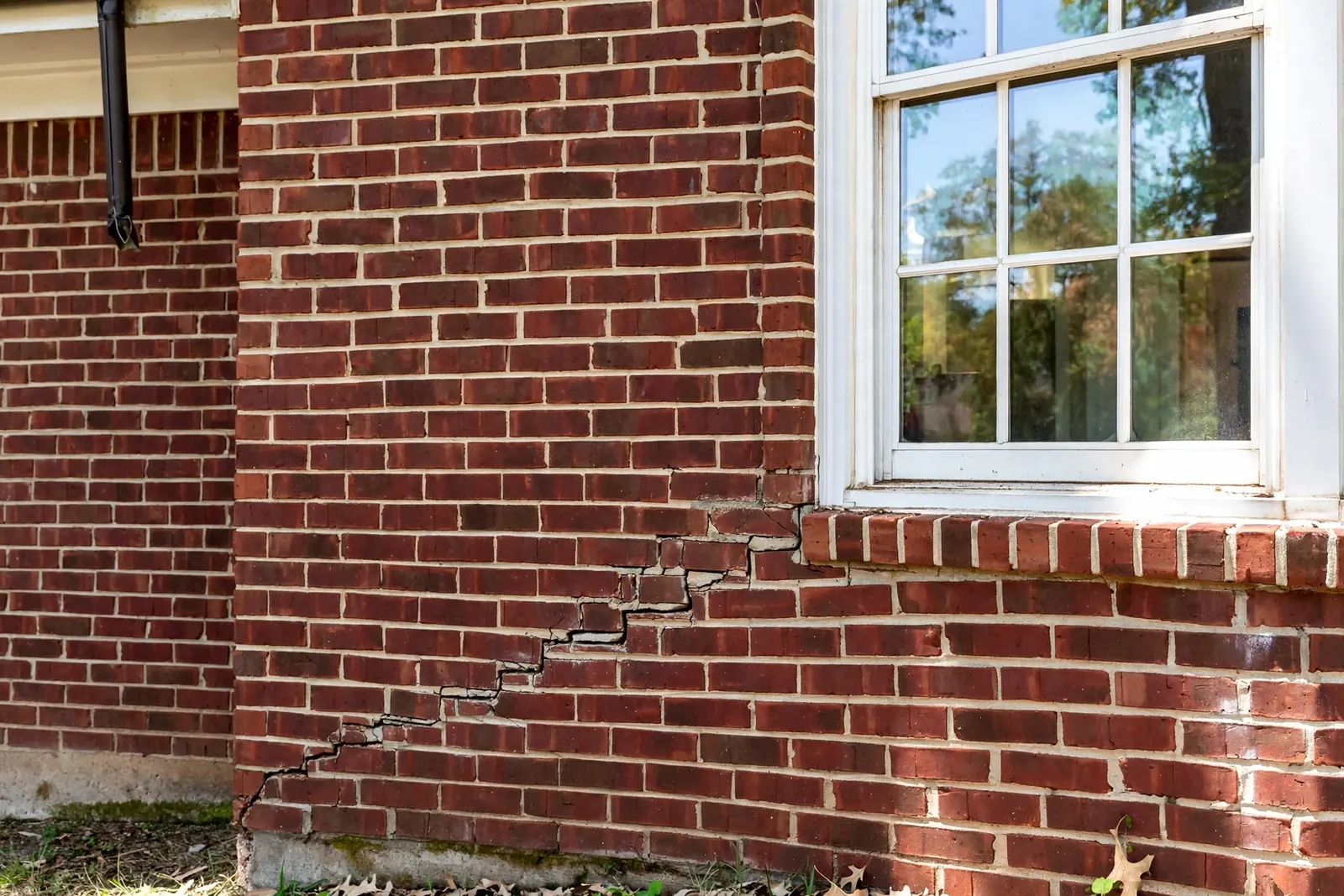
The plate below is the key. Three crack families cover nearly everything we see in Burleson: horizontal, stair-step and hairline, with vertical cracks as the fourth, quieter case. For each one: where it shows up, what causes it, and how much it should worry you.
Stair-step cracks
A stair-step crack climbs through brick or block mortar in steps, following the joints because mortar is weaker than brick. It almost always angles toward the section of foundation that dropped. Stair-stepping is settlement's signature: the wall is a continuous beam, one end of it went down, and the masonry tore along its weakest path to follow. Width counts here. A hairline step in the mortar of an old wall can be decades old and dead; a step you can fit a pencil tip into, or one that is offset so the bricks no longer sit flush, is a house that moved and may still be moving. Verdict: always worth measuring. This is the pattern our crack repair work starts from most often.
Horizontal cracks
A horizontal crack runs along a wall, in a line, usually through a crawl space stem wall, a block wall or a poured wall below grade. Horizontal means pressure from the side: saturated soil and water pushing the wall inward. In a crawl space wall it can mean the wall is bowing, which is structural in a way a cosmetic crack never is. Check whether the wall is still plumb and whether the crack displaces, one side sitting proud of the other. Verdict: take it seriously and get eyes on it soon, especially with any bowing or displacement. Sideways pressure does not fix itself, and waterproofing plus drainage is often part of the answer because water load is usually what is pushing.
Hairline cracks
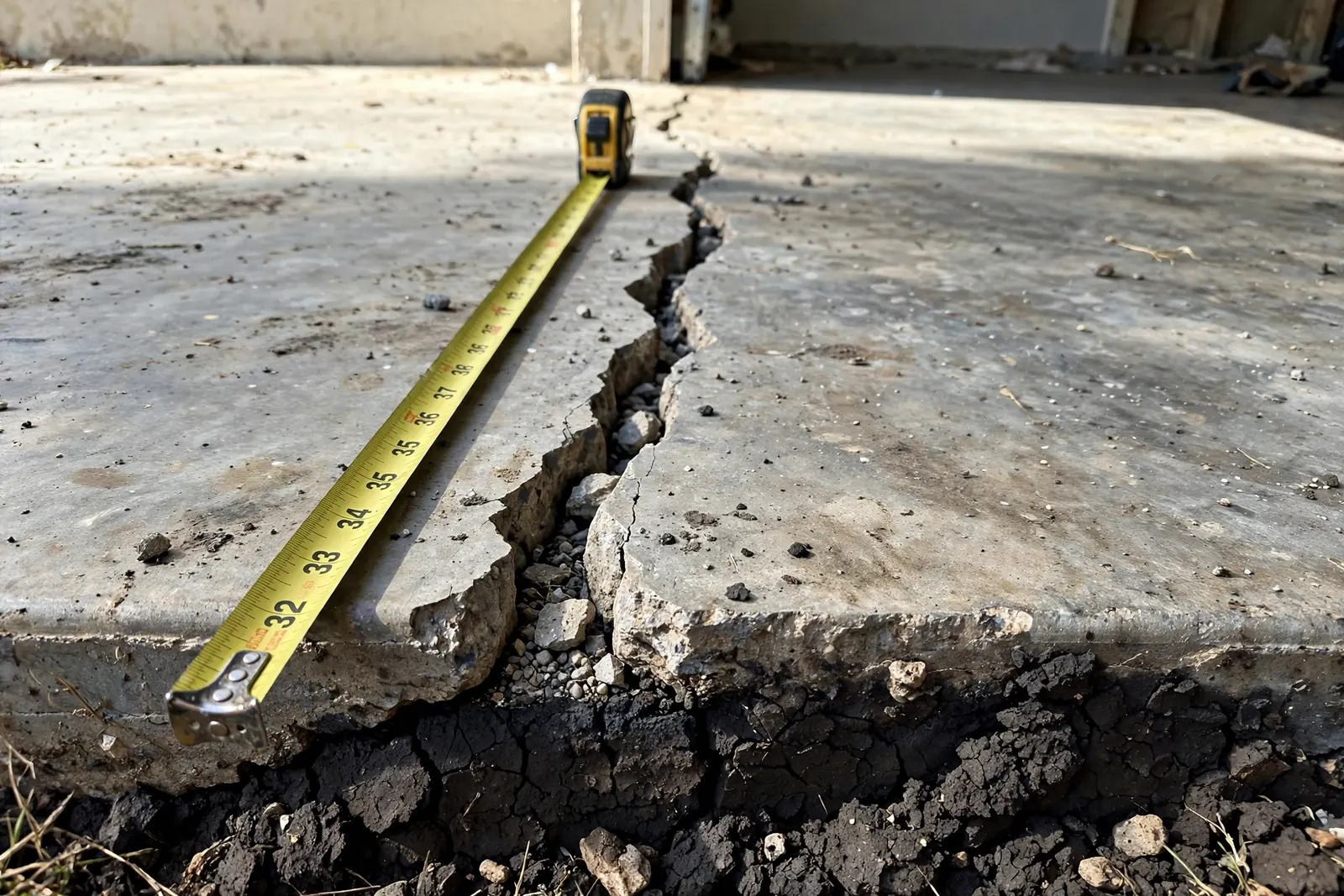
Hairlines are the thin ones, a sixteenth of an inch or less, in slab surfaces, garage floors, driveways and stucco. Their usual cause is the concrete itself: it shrinks as it cures and it breathes with temperature forever after. A hairline that does not grow, does not offset, and does not leak is a cosmetic fact of concrete, not a foundation event. The discipline with hairlines is the watch: pencil marks at both ends, dated. A hairline that lengthens or widens has stopped being a hairline story and joined the movement story. Verdict: mark it, watch it, relax about it unless it changes.
Vertical cracks
Vertical cracks run up and down, common in poured walls and at control joints. Straight vertical, even width, no offset: usually shrinkage or the joint doing its designed job. The exceptions matter. A vertical crack wider at the bottom than the top (or the reverse) means one side rotated, which means differential movement. A vertical crack with offset, one face pushed out past the other, means lateral movement. Either exception graduates the crack from cosmetic to measured. Verdict: even and flush is fine; tapered or offset gets an inspection.
Efflorescence and other crack neighbors
White, powdery crust along a crack or across a block face is efflorescence: water moving through the masonry and leaving its minerals behind as it dries. It is not mold and it is not structural, but it is a witness. It says water travels this wall regularly, and on a foundation wall that makes it a drainage and waterproofing conversation, not a crack conversation. Scrubbing it off without addressing the water is repainting a gauge. Note where it appears and how fast it returns after cleaning; a wall that re-crusts in one wet season is telling you exactly how much water it handles, and that number belongs in any repair plan for the house.
The two tests that settle it
The growth test: pencil line across the crack, dated. Movement shows in a season or two on clay, because the soil cycles hard between wet and dry. The offset test: run a straightedge or a fingertip across the crack. If the two sides sit at different heights, something moved vertically, full stop. A crack that grows or offsets is not a cosmetic crack anymore regardless of its pattern. Both tests are free, and the third test, the elevation survey, is free with us and settles what the first two raise. If your walls are showing a pattern from this guide, our foundation inspection will tell you exactly where the floor stands.
Keep Reading
More Guides
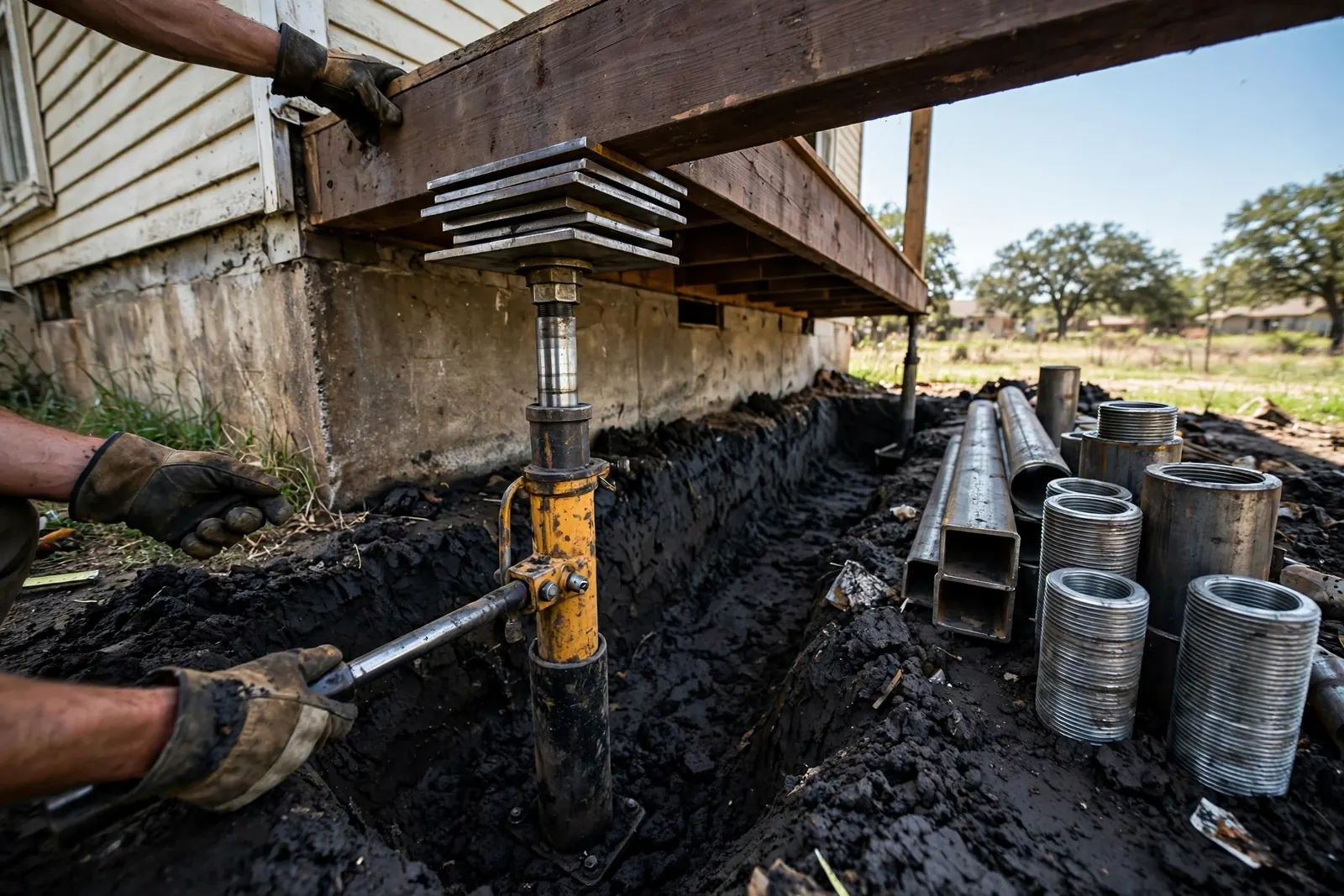 Signs of Foundation SettlementThe symptoms that matter, the ones that do not, and the two free tests that separate them.Foundation Crack TypesHorizontal, stair-step, hairline, vertical: what each pattern is telling you about your house.
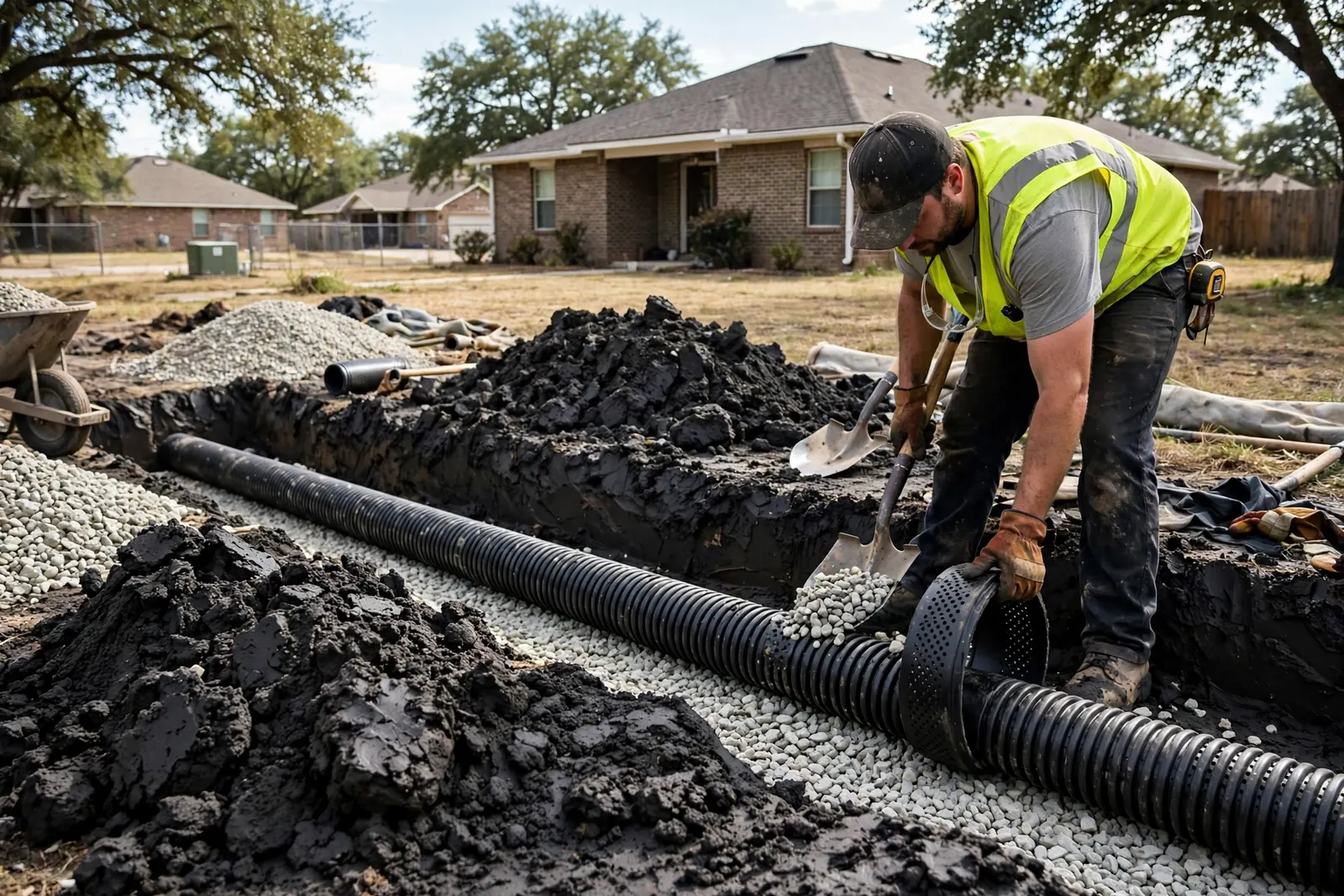 Expansive Clay Soil in North TexasThe blackland clay mechanism under every Burleson foundation: swell, shrink, and how to live on it.
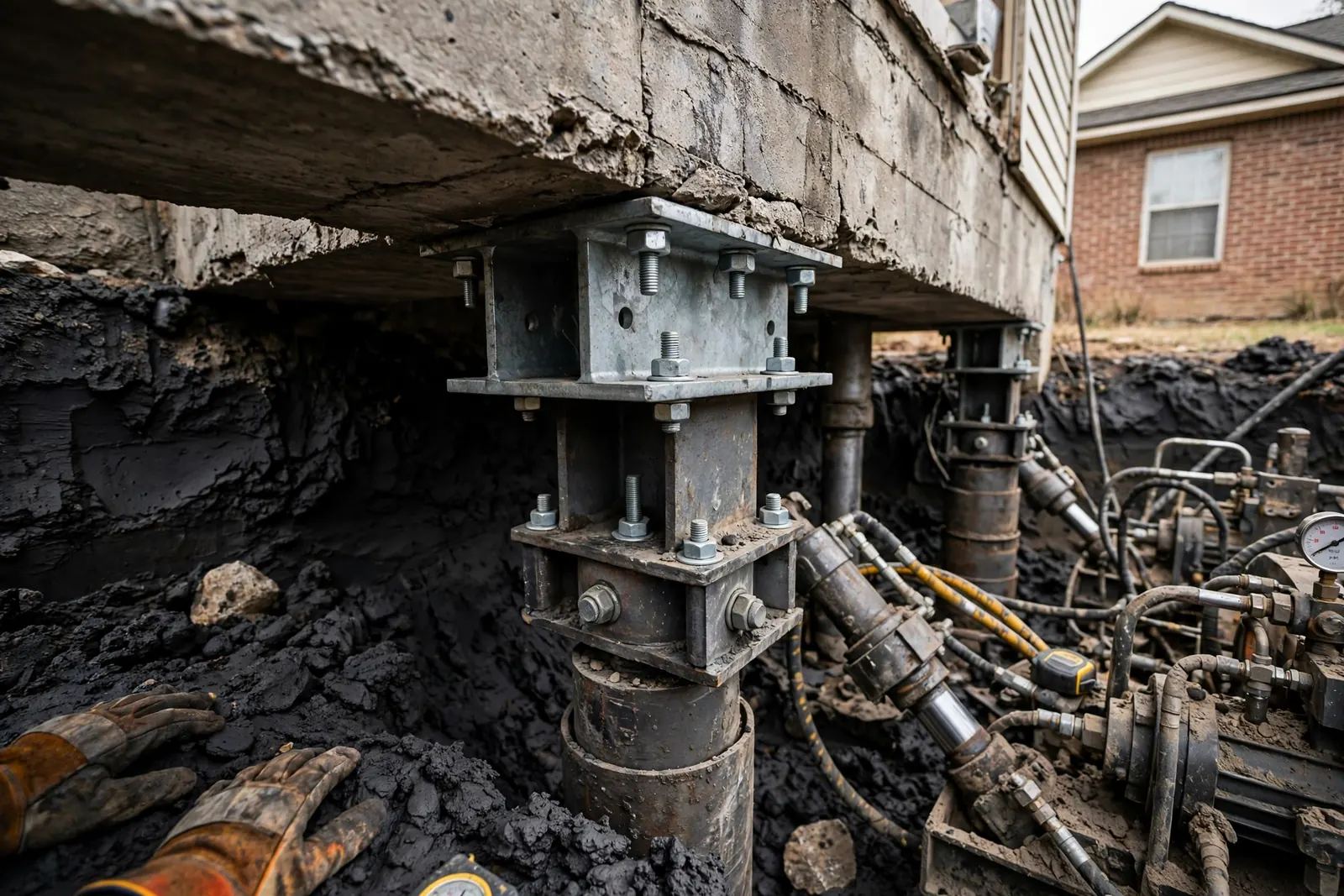 Pier Systems ExplainedSteel, pressed and helical piers in plain language, and how to read any pier quote in this market.
The Work Itself
Services Behind This Guide
Foundation RepairPiers under the low side, a controlled lift on hydraulics, and a floor that reads level when we are done. That is the whole job, done right.Slab RepairSunken slab sections lifted and locked onto piers. Every crack mapped before we start and checked again after the lift.Drainage & French DrainsWater is the cause. Drains are the cure. We dig the trenches nobody wants to dig and grade the yard so water leaves.Get the Floor Read
Tell us what the house is doing and we will call you back to set the free evaluation. Prefer to talk? Call (682) 439-9099.
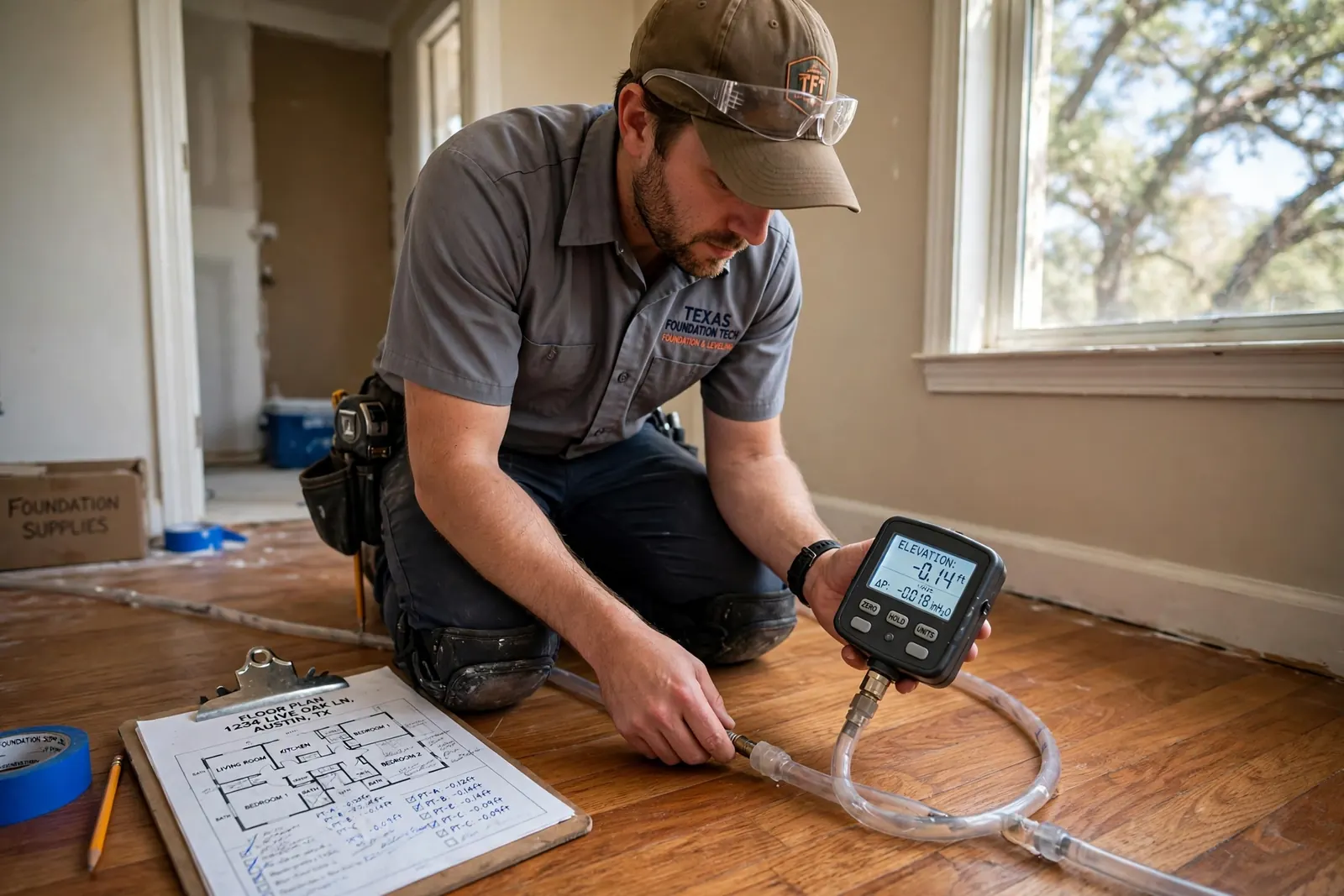
Get a Free Evaluation
We measure the whole floor, show you the numbers, and quote it flat. It costs you nothing.