Signs of Foundation Settlement and Sinking
Foundation settlement is a house going down unevenly: one part drops, the part next to it does not, and the structure between them complains. The complaints are the signs. This guide walks through the ones that matter, the ones that are usually innocent, and the simple checks that separate the two before you spend a dime.
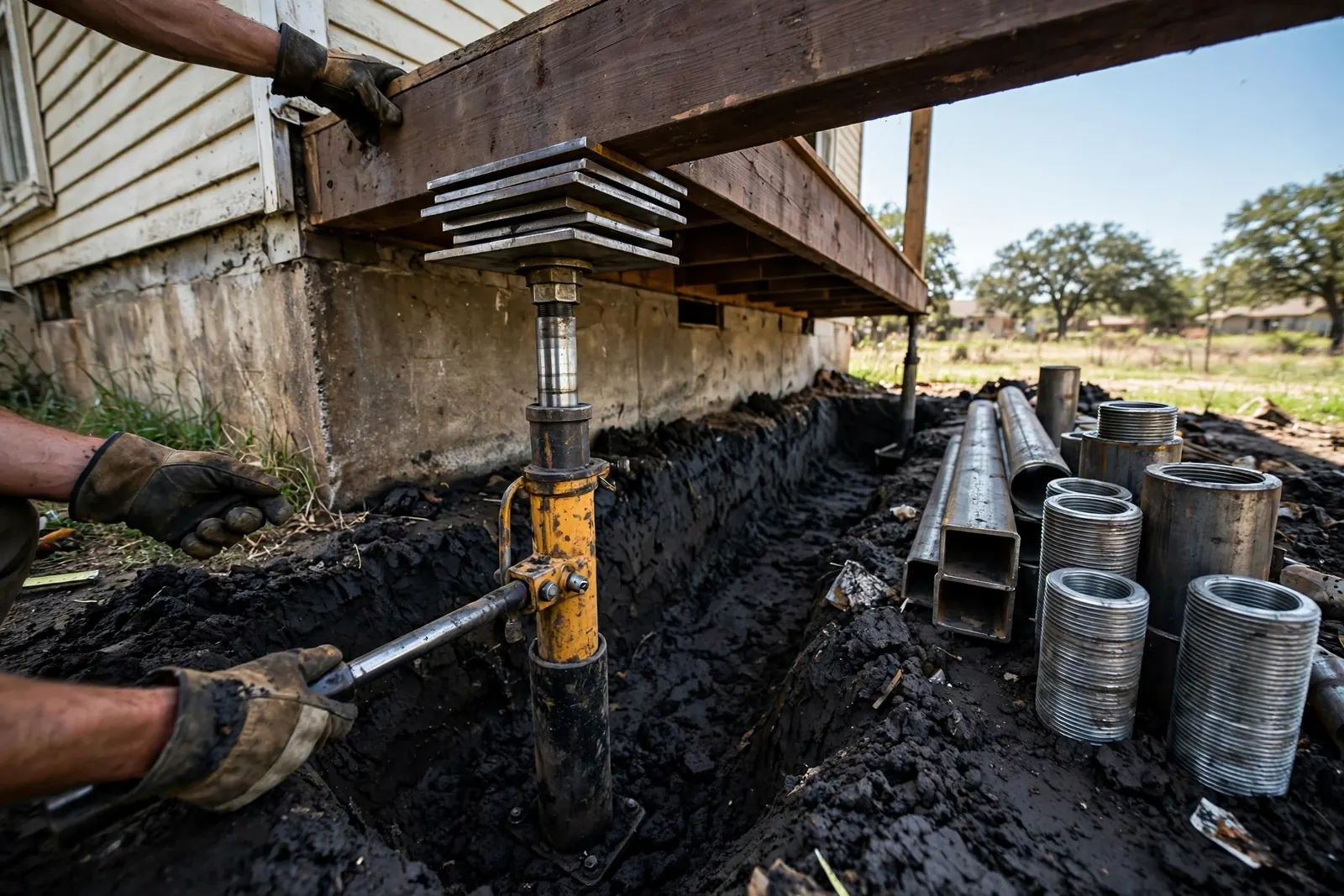
Settlement is not the same as a house being old. A house can sit for sixty years without moving an eighth of an inch and then drop a corner in two dry summers. What changes is the support: soil under one section shrinks, washes or compresses, and that section goes down until something carries it again. Everything below is what that process looks like from inside the house.
The signs that matter
Stair-step cracks in brick or block. The mortar joints step up or down toward the low side. This is the single most reliable outside sign of settlement, because brickwork is rigid and records movement like a graph. Doors and windows that stick seasonally, then worse. A door that drags in August and frees up in spring is riding soil moisture. A door that drags a little more every year, or has been planed down twice, is riding settlement. Cracks radiating from window and door corners inside. Drywall is weak exactly at those corners, so frame twist shows there first. Diagonal cracks that keep returning after patching are the house re-tearing the same seam. Sloping floors you can feel. A dropped section tilts everything on it. The marble test is real: if it rolls consistently to one side of the room, that side is low. Gaps where things used to meet. Crown molding pulling away, cabinets separating from the wall, a fireplace chimney leaning away from the house with a widening gap at the roof line. Materials are separating because the base under one side moved. A slab crack with a lip. Two sides of a crack at different heights means one side went down. Feel it with a bare foot or a straightedge.
The signs that usually do not matter
Hairline cracks in a garage or driveway slab that never change, nail pops in drywall, a single hairline crack over a door in a newer house as the frame dries, and thin vertical cracks in a stem wall that are the same width top to bottom. These are curing, temperature and framing being framing. Mark them with a pencil line and a date anyway. The mark is free, and a mark that splits next season just promoted that crack to the first list.
Heave: the other direction
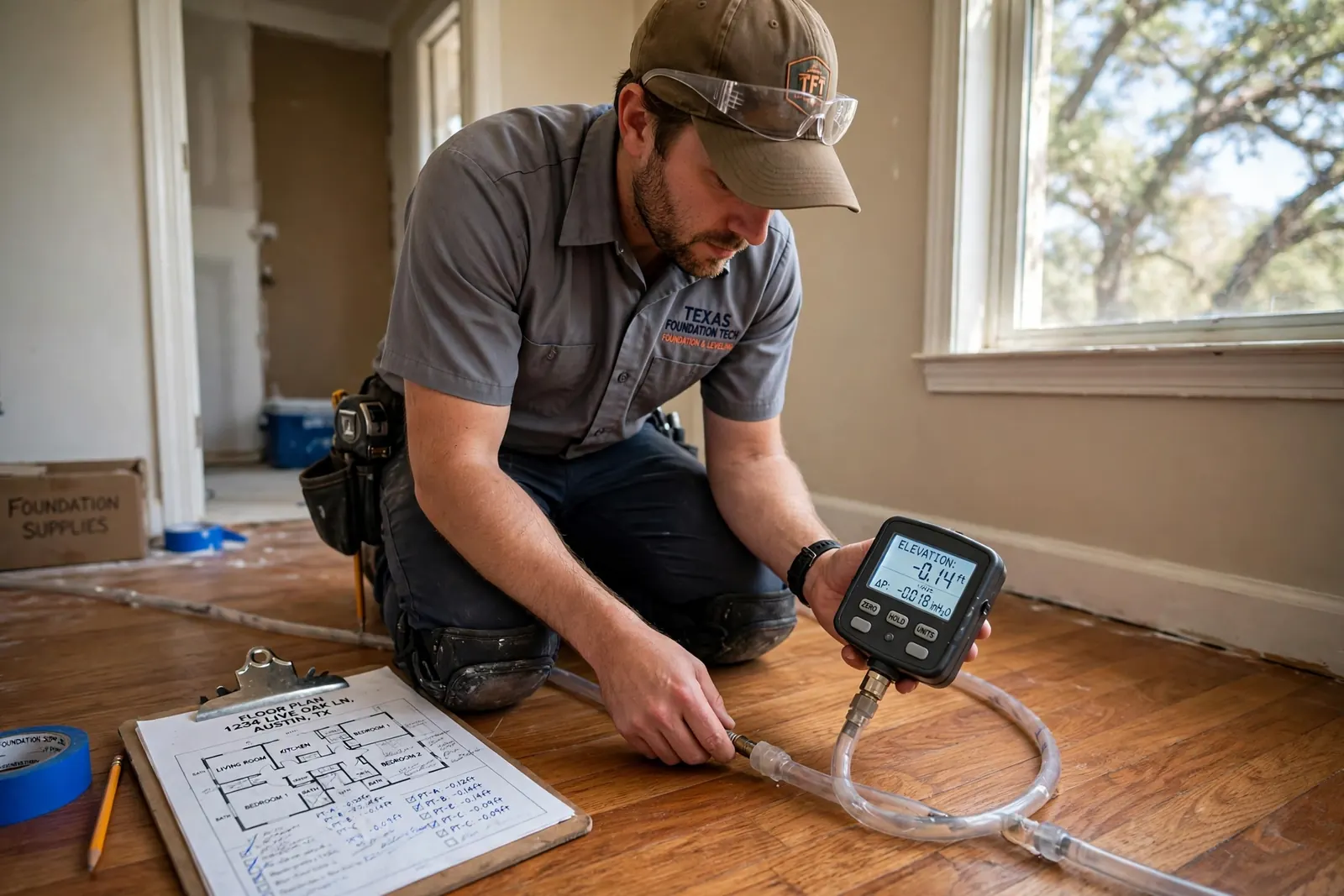
Not all movement is down. In wet periods, North Texas clay swells and can push a slab up, especially at the center of a house where the soil stays moist year-round while the edges cycle. Heave looks like settlement's mirror: doors stick at the top, floors dome instead of dish, cracks close in winter that opened in summer. The plate below shows both directions. Telling settlement from heave matters because the repairs differ, and it is one of the main reasons we measure instead of guessing: the contour map shows which sections are high and which are low, and the shape of the map names the problem.
Keep a house log
The cheapest diagnostic instrument in foundation work is a dated notebook. Write down when a door started sticking, photograph cracks with a coin for scale, note the month the gap appeared under the baseboard. Six months of honest notes will tell a surveyor more than an hour of guessing, because movement has a tempo, and tempo separates the houses that are drifting slowly from the houses that are going somewhere. Seasonal notes matter most in North Texas: a sign that opens every August and closes every November is the clay breathing, while a sign that opens further each cycle and never fully closes is settlement keeping the change. Bring the log when you call anybody, us included. It makes the conversation shorter and the verdict surer.
What to do with a sign
One sign, mark it and watch it. Two or more signs, or any sign that is growing, get the floor measured. The measurement settles the argument the signs are having, and with us it is free and comes with the map. If the readings come back stable, you have peace of mind with documentation. If they do not, you have the facts while the repair is still the small version of itself. Settlement does not heal, and it does not stop being cheaper today than next year.
Keep Reading
More Guides
Signs of Foundation SettlementThe symptoms that matter, the ones that do not, and the two free tests that separate them.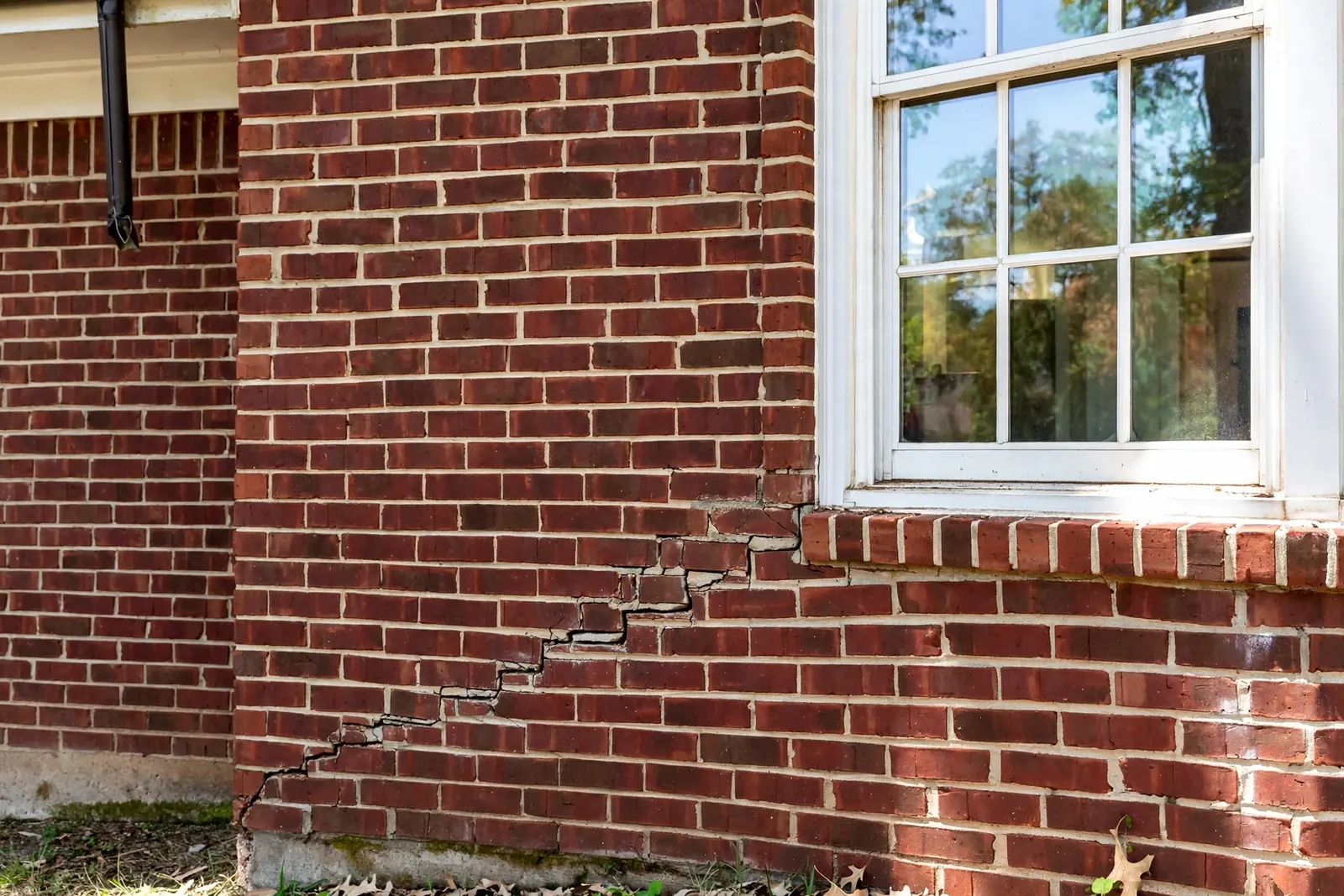 Foundation Crack TypesHorizontal, stair-step, hairline, vertical: what each pattern is telling you about your house.
 Expansive Clay Soil in North TexasThe blackland clay mechanism under every Burleson foundation: swell, shrink, and how to live on it.
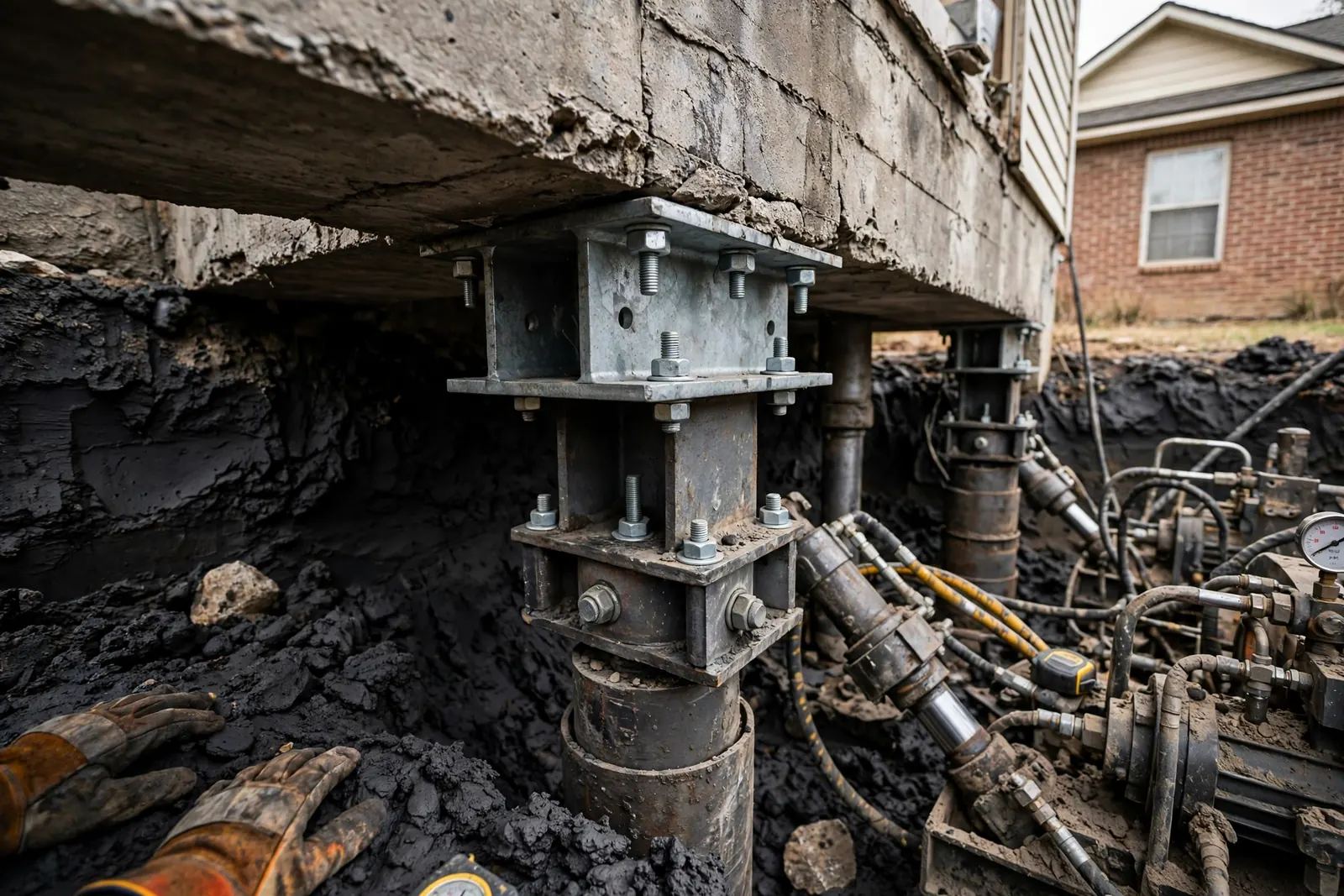 Pier Systems ExplainedSteel, pressed and helical piers in plain language, and how to read any pier quote in this market.
The Work Itself
Services Behind This Guide
Foundation RepairPiers under the low side, a controlled lift on hydraulics, and a floor that reads level when we are done. That is the whole job, done right.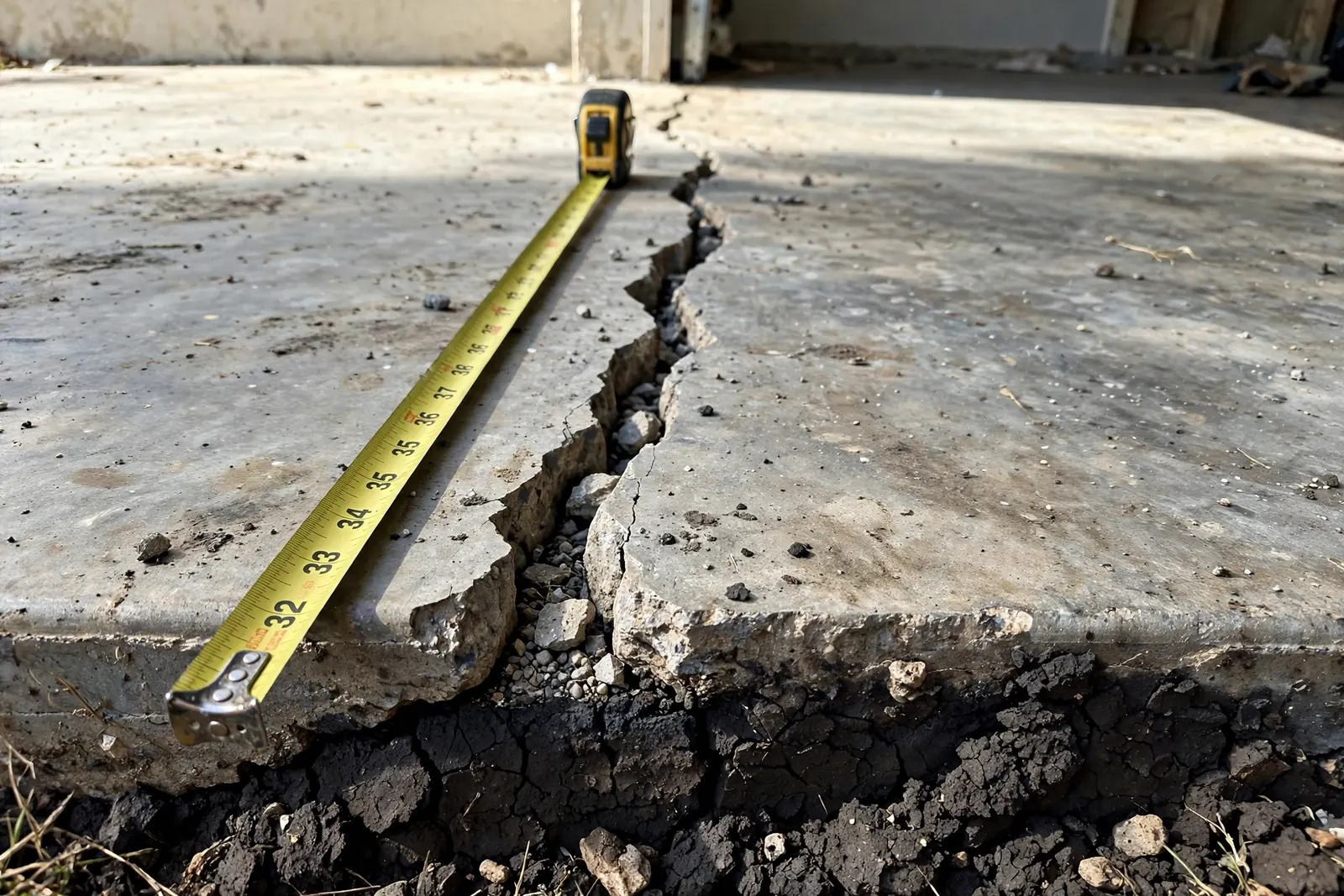 Slab RepairSunken slab sections lifted and locked onto piers. Every crack mapped before we start and checked again after the lift.Drainage & French DrainsWater is the cause. Drains are the cure. We dig the trenches nobody wants to dig and grade the yard so water leaves.
Get the Floor Read
Tell us what the house is doing and we will call you back to set the free evaluation. Prefer to talk? Call (682) 439-9099.
Get a Free Evaluation
We measure the whole floor, show you the numbers, and quote it flat. It costs you nothing.