Foundation Crack Repair in Burleson, TX
A crack in your brick or your slab is the house showing you where the ground moved. Foundation crack repair in Burleson, TX starts with reading the crack, because the crack pattern tells us whether you need a tube of sealant or a row of piers.
Serving Burleson · Mansfield · Joshua · Alvarado · Cleburne · Crowley
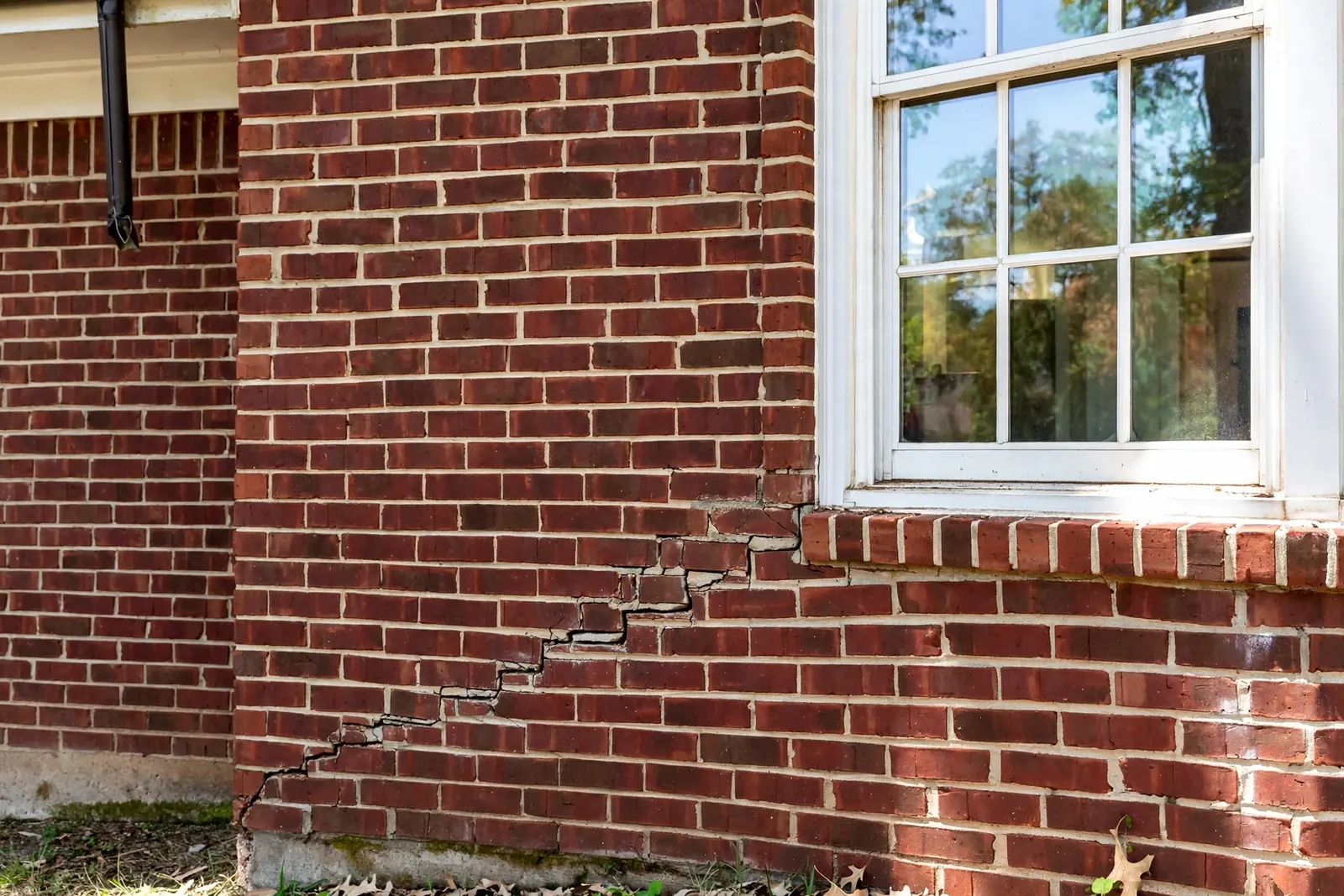
Some cracks are cosmetic: hairline shrinkage lines that show up as concrete cures and never change again. Some are the first page of a longer story: a stair-step crack climbing through brick mortar means the wall below it is riding a foundation that has dropped at one end. Sealing the second kind without stopping the movement is a waste of your money, and we will not do it. We measure the floor first. If the readings say the house is still, we seal the crack and show you how to watch it. If the readings say it moved, we fix the movement, then the crack.
Reading the crack
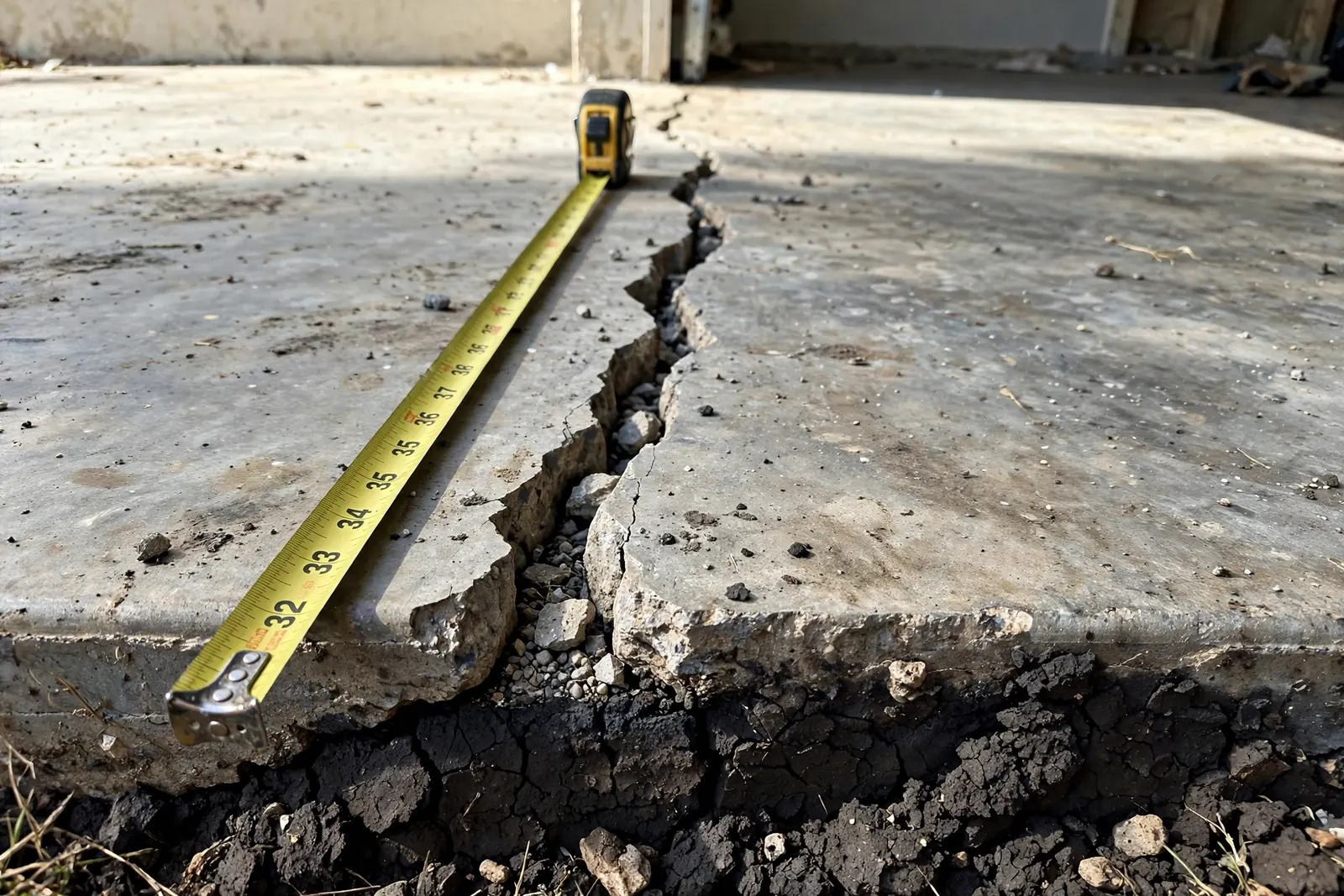
Cracks talk, if you know the patterns. The plate below is the key we use on evaluations all over Burleson. A stair-step crack follows the mortar joints in brick or block, stepping up or down toward the dropped side. It is the classic settlement signature in this town. A horizontal crack runs along a wall, and in a crawl space or stem wall it usually means soil or water pressure pushing sideways. A vertical crack is often shrinkage or a control joint doing its job, but a vertical crack that is wider at one end than the other means one side moved more than the other. Hairline cracks in a garage floor or driveway slab are usually curing and temperature, not failure, as long as they are not growing and the two sides sit level with each other. Width matters, growth matters more. Put a pencil mark across the crack with today's date on it. If the line splits in a season, the crack is live and the ground under it is still moving. That is a measurement job, and it is free.
How we repair a crack
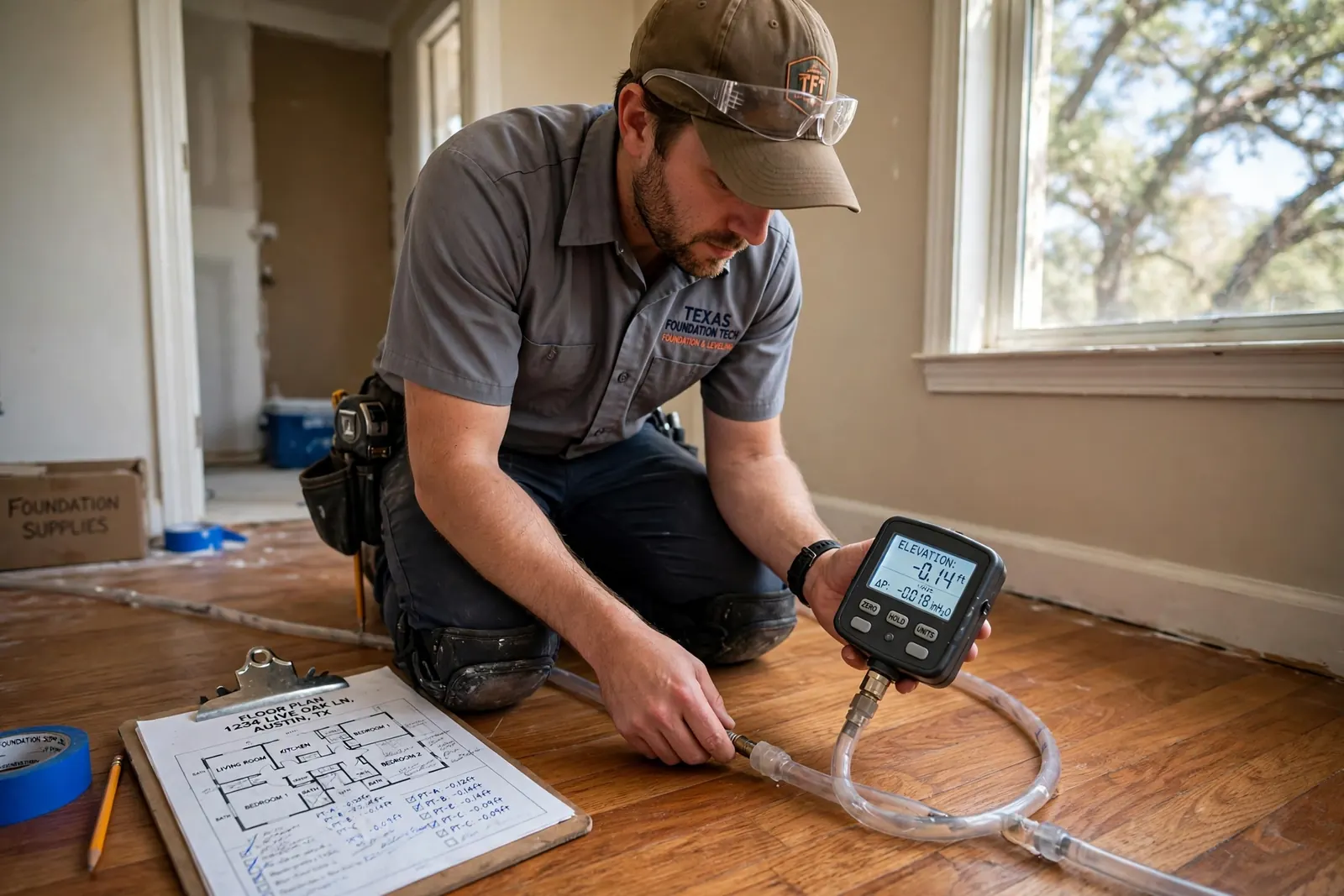
First, the evaluation: elevation readings across the floor and a walk of the whole perimeter, because the crack you see is rarely the only one. If the house has settled, the repair is foundation repair: piers under the dropped section, a controlled lift, and then the crack work once the wall is back where it belongs. Lifting closes many cracks partway or all the way by itself. If the house reads level, the crack gets a direct repair: routed out, cleaned, and sealed with a flexible polyurethane or epoxy matched to the surface, tooled so water stays out and the line reads as a repaired joint instead of a smear. On slab cracks we check both sides for a lip, because a crack you can feel with your shoe is a slab section that has dropped, and that is a slab repair conversation, not a sealing conversation.
What crack repair costs
A crack that only needs sealing is one of the cheapest calls we make. A crack that is riding a dropped corner costs what the piers under that corner cost, and the number comes from the readings, not from the crack's photograph. Our foundation repair cost guide lays out the typical per-pier and per-job ranges for North Texas so you can sanity-check any quote, ours included. Your quote from us is flat and written before work starts.
One habit worth starting today, whatever the readings eventually say: photograph your cracks with a ruler in the frame, write the date on a piece of tape beside each one, and do it again in three months. A crack with a dated photo history is evidence; a crack without one is an argument. When we survey a house whose owner has kept that record, the diagnosis gets faster and more certain, and if the crack turns out to be a sleeper that never changes, your photos are the proof that lets everyone relax. It costs ten minutes and it is the single most useful thing a homeowner can do before calling anybody.
Straight Answers
Questions about cracks
Is a stair-step crack always serious?
Almost always worth measuring. Stair-step cracks follow settlement so reliably that we treat every one as live until the floor readings say otherwise. The measurement is free and takes the guesswork out of it.
Can I just fill it with mortar or caulk?
You can, and on a stable hairline crack that is a reasonable weekend fix. On a live crack, filler pops out or splits again within a season or two, and the money is gone. Worse, fresh filler hides the crack's growth, which is the evidence you need. Mark it and watch it first, or let us measure it.
The crack is in my garage floor. Is that the foundation?
A garage slab is usually a separate pour from the house slab, and many garage cracks are pure shrinkage. The ones that matter run from the garage into the house slab, or come with a lip you can feel. If the crack connects to the house or the door into the house is sticking, get it measured.
Do cracks come back after repair?
A sealed crack on a stable house stays sealed. A crack on a piered corner stays closed because the corner cannot drop again; the pier work carries a lifetime warranty. A crack sealed over live movement comes back, which is exactly why we refuse to sell that sequence.
Keep Reading
Related Services
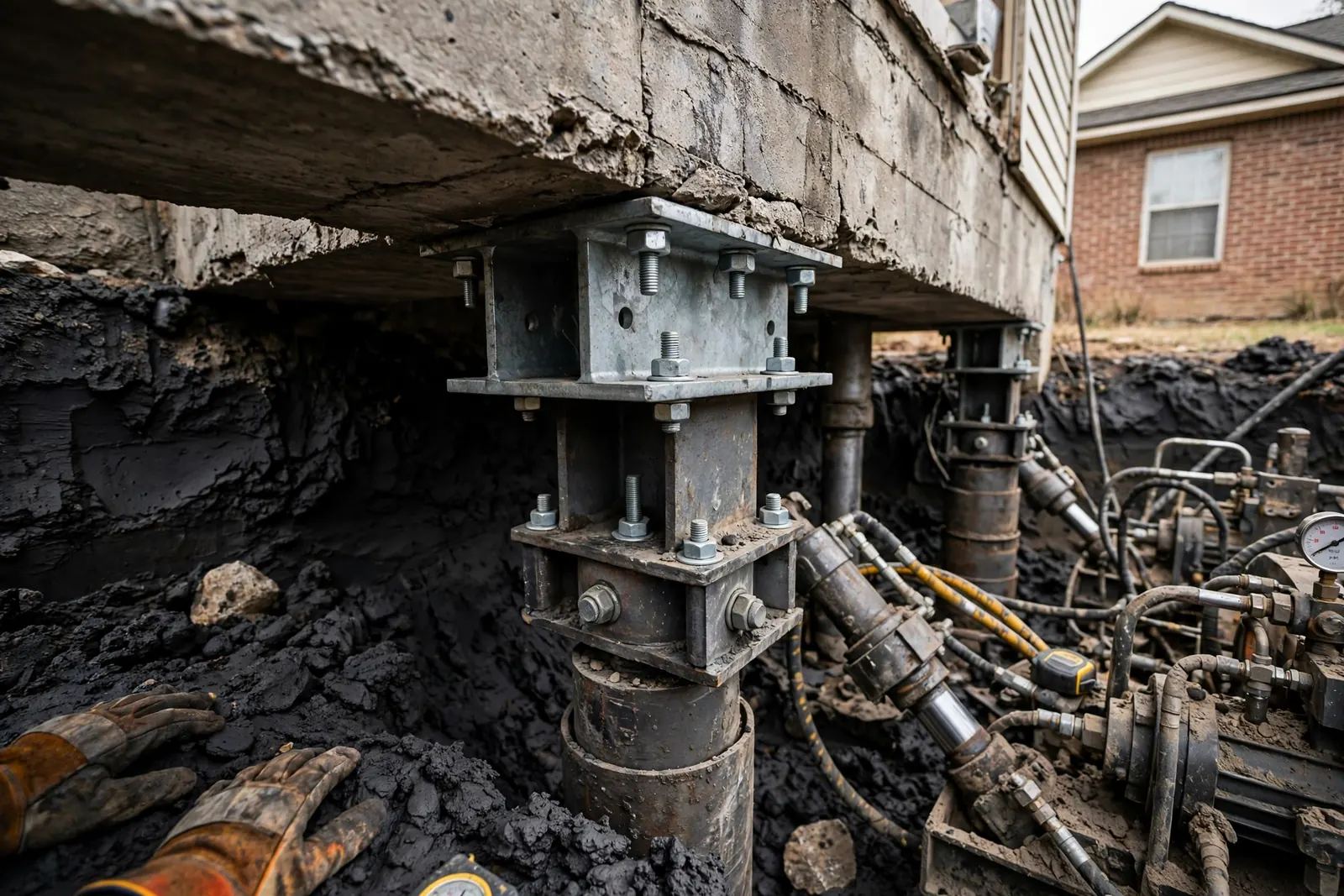 Foundation RepairPiers under the low side, a controlled lift on hydraulics, and a floor that reads level when we are done. That is the whole job, done right.Slab RepairSunken slab sections lifted and locked onto piers. Every crack mapped before we start and checked again after the lift.
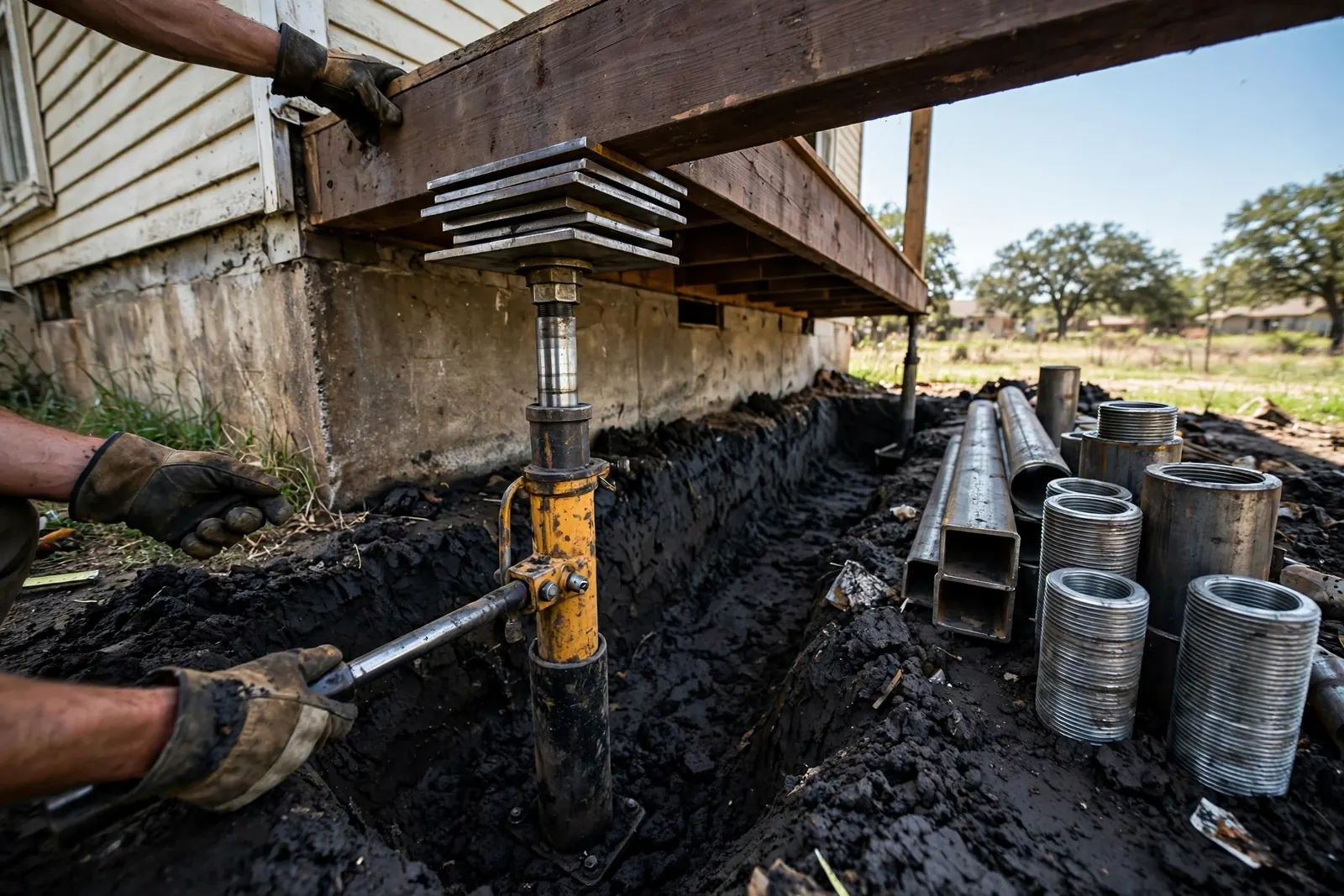 House LevelingThe whole house brought back to level, room by room, reading by reading. Doors close again. Floors stop sloping. Done.
Get the Floor Read
Tell us what the house is doing and we will call you back to set the free evaluation. Prefer to talk? Call (682) 439-9099.
Get a Free Evaluation
We measure the whole floor, show you the numbers, and quote it flat. It costs you nothing.